US Power Grid Faces Record Demand Strains
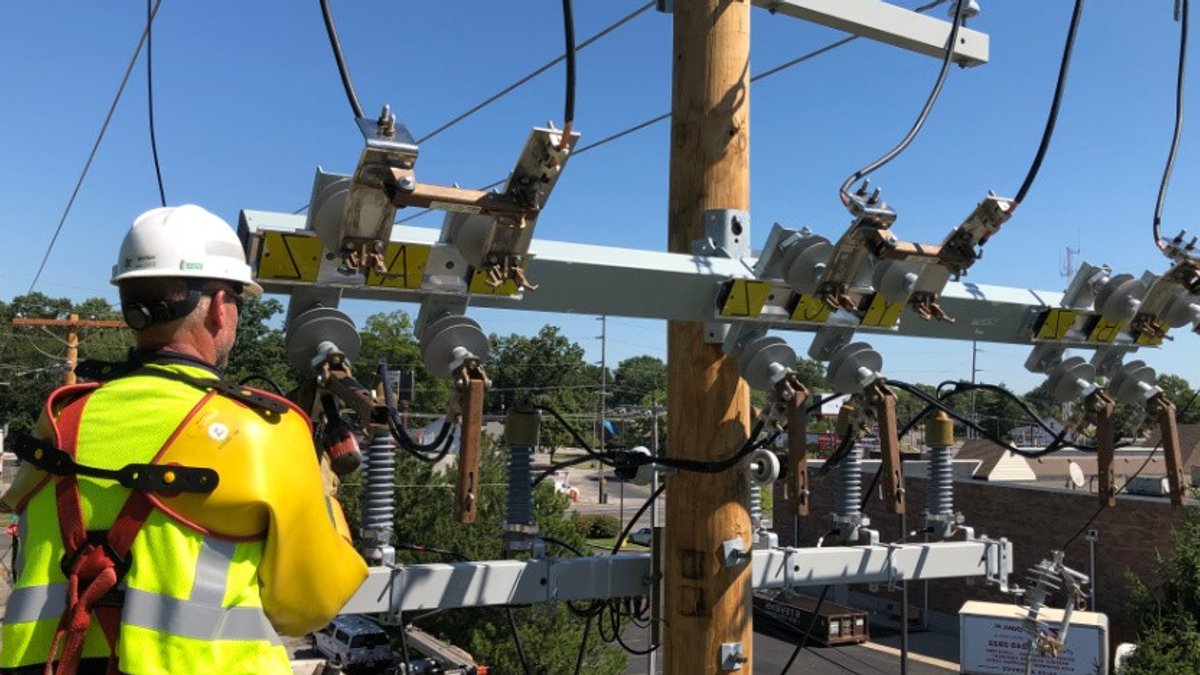
The U.S. power grid is facing significant strain as electricity demand is expected to hit an all-time high this year and next, driven by the data center buildout of Big Tech. This trend is seen extending and possibly accelerating due to the IT industry and its artificial intelligence race, with electricity consumption projected to reach 4,268 billion kWh this year and 4,391 billion kWh in 2027.
They need to upgrade the grid to meet this growing demand, but some see this as a challenge due to the traditional grid’s design around hydrocarbons, rather than alternative energy sources.
The grid was originally built around power plants fueled by coal and gas, which provided reliable electricity supply, but now struggles to accommodate the increasing number of utility-scale wind and solar installations.
Related: Oil prices drop on reduced demand forecasts
These installations often cannot deliver power at top levels due to grid constraints, such as insufficiently branched-out lines, which is a major challenge for decarbonization supporters, as it hinders the ability to bring electricity to demand centers.
Wind and solar installations are built where there is wind and sun, rather than near electricity demand centers, requiring the use of the existing line network built for baseload generators to bring their electricity to those demand centers.
This challenge is exacerbated by the fact that demand centers have changed significantly over the past century, with population growth and the rise of Big Tech and artificial intelligence driving demand, and a single query using ChatGPT can use up to 10 times the energy of a traditional Google search.
Training models like ChatGPT requires enormous amounts of electricity, equivalent to the consumption of a small town, and companies like Goldman Sachs have projected that global electricity demand from data centers will increase by as much as 165% by 2030, from 2023 levels.
Related: Macquarie boss to step down
The biggest challenge for the grid is not generation, but transmission, as the links between generators and consumers are what bring the grid to life, but have also emerged as a constraint due to the increasing number of new demand and supply points, making transmission a key area of focus.
To address this, the grid needs more transmission lines, but a transformer shortage has emerged as a result of the fast growth in demand and alternative electricity supply, making it uncertain whether there will be enough electricity to meet the projected demand, and some are opting for bring-your-own-electricity solutions.
Some regional authorities are mandating tech companies to secure their own generation, while others are exploring alternative solutions to ensure a reliable supply of electricity.

Oil prices drop on reduced demand forecasts


